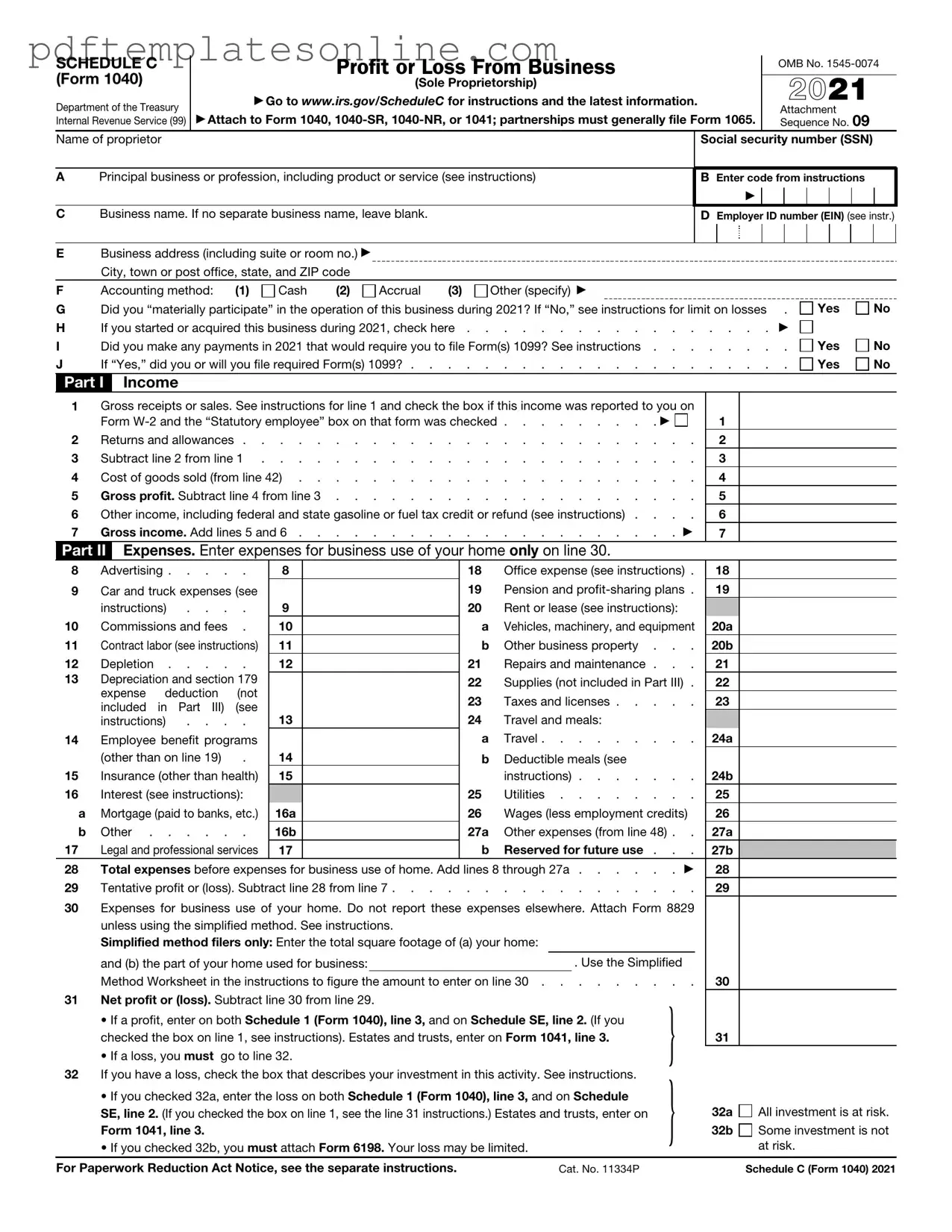
Blank IRS Schedule C 1040 Form
Key takeaways
When filling out and using the IRS Schedule C (Form 1040), there are several important points to consider. This form is primarily used by sole proprietors to report income and expenses related to their business activities. Here are key takeaways to keep in mind:
- Accurate Record-Keeping: Maintain detailed records of all income and expenses. This documentation is essential for accurately completing the form and may be required in case of an audit.
- Understanding Business Expenses: Familiarize yourself with what qualifies as a deductible business expense. Common deductions include costs for supplies, travel, and home office expenses.
- Self-Employment Tax: Be aware that income reported on Schedule C is subject to self-employment tax. This tax is in addition to regular income tax and should be factored into your financial planning.
- Net Profit or Loss: The form helps determine your net profit or loss from your business. This figure is crucial, as it impacts your overall tax liability.
- Filing Deadlines: Ensure that you file Schedule C by the tax deadline, which is typically April 15. Extensions may be available, but they do not extend the time to pay any taxes owed.
- Consult a Professional: If you have questions or complex financial situations, consider seeking advice from a tax professional. Their expertise can help ensure compliance and optimize your tax situation.
Common mistakes
Filling out the IRS Schedule C (Form 1040) can be a daunting task for many. One common mistake is failing to report all income. Every dollar earned from self-employment must be documented. Omitting even a small amount can lead to issues with the IRS.
Another frequent error is misclassifying expenses. Individuals often mix personal expenses with business expenses. It’s crucial to differentiate between the two to avoid potential penalties. Accurate categorization ensures that deductions are valid and can withstand scrutiny.
Many people overlook the importance of keeping thorough records. Without proper documentation, it becomes challenging to substantiate claims made on the form. Receipts, invoices, and bank statements should be organized and readily available.
Some filers neglect to take advantage of all available deductions. Common deductions include home office expenses, vehicle use, and supplies. Not claiming these can result in paying more taxes than necessary.
Another mistake is failing to calculate the self-employment tax correctly. This tax applies to net earnings from self-employment. Understanding how to compute this can prevent unexpected tax liabilities.
Individuals often forget to sign and date the form. A missing signature can delay processing and lead to complications. It is essential to ensure that all necessary signatures are present before submission.
Lastly, procrastination can lead to rushed errors. Filling out the form at the last minute often results in mistakes. It is advisable to start early, allowing ample time for review and corrections.
Misconceptions
Understanding the IRS Schedule C 1040 form is crucial for many self-employed individuals and small business owners. However, several misconceptions can lead to confusion. Here are eight common myths about this important tax form:
-
Only large businesses need to file Schedule C.
This is not true. Any self-employed individual or sole proprietor, regardless of the size of their business, must file Schedule C to report income and expenses.
-
You can only deduct expenses if you have receipts.
While having receipts is important, you can also use other forms of documentation, such as bank statements or invoices, to support your deductions.
-
All income must be reported on Schedule C.
This is correct; however, many people mistakenly believe that only cash income needs to be reported. All income, including bartering and non-cash payments, must be included.
-
Filing Schedule C guarantees a tax audit.
While filing this form does increase the likelihood of being audited compared to filing a standard 1040, it does not automatically mean you will be audited.
-
You can only deduct expenses that are directly related to your business.
This is partially true. You can deduct some indirect expenses, such as a portion of your home office costs, if they are necessary for your business operations.
-
Once you file Schedule C, you cannot change your business classification.
This is a misconception. You can change your business classification at any time, but it may affect how you file taxes in the future.
-
Schedule C is only for freelancers.
Many self-employed individuals, including contractors and sole proprietors, use Schedule C. It is not limited to freelancers.
-
You cannot file Schedule C electronically.
This is incorrect. Many tax software programs allow you to file Schedule C electronically, making the process easier and faster.
By understanding these misconceptions, you can navigate the Schedule C form with greater confidence and accuracy. Always consider consulting a tax professional if you have specific questions or concerns about your situation.
Dos and Don'ts
When completing the IRS Schedule C (Form 1040), it is important to follow certain guidelines to ensure accuracy and compliance. Below is a list of things to do and avoid.
- Do gather all necessary documentation before starting the form.
- Do accurately report all income earned from your business.
- Do keep detailed records of expenses to support your deductions.
- Do review your completed form for any errors before submission.
- Don't estimate your income or expenses; provide exact figures.
- Don't forget to sign and date the form.
- Don't neglect to check for updates to tax laws that may affect your filing.
- Don't leave any required fields blank; fill in all necessary information.
Other PDF Forms
Txdmv Login - The Statement of Fact form is a document required for vehicle transactions in Texas.
To effectively manage the financial aspects of property improvements, it is essential for contractors and suppliers to understand the significance of the Mechanics Lien California form. This legal document acts as a safeguard, allowing these parties to secure payment for the labor and materials they provide. For those looking for a reliable source to access this important documentation, California PDF Forms offers editable templates to streamline the process.
Da Form 4886 - It serves to document identifying data for security and recovery purposes.
Detailed Guide for Writing IRS Schedule C 1040
Filling out the IRS Schedule C 1040 form is an essential step for self-employed individuals or those running a business as a sole proprietor. This form allows you to report income and expenses related to your business activities. Once completed, it will be submitted with your personal income tax return, which helps determine your overall tax liability.
- Gather all necessary documents, including your business income records, expense receipts, and any other relevant financial statements.
- Begin by entering your name and Social Security number at the top of the form.
- Fill in your business name, if different from your own, along with the business address.
- Indicate the type of business you operate by selecting the appropriate code from the provided list.
- Report your gross receipts or sales in the designated section, ensuring accuracy to reflect your total income.
- List your business expenses in the appropriate categories, such as advertising, car and truck expenses, and supplies. Be thorough and include all relevant costs.
- Calculate your net profit or loss by subtracting total expenses from your gross income.
- Complete the remaining sections of the form as required, including any additional information that may be pertinent to your business.
- Review the entire form for accuracy and completeness before signing and dating it.
- Attach Schedule C to your Form 1040 and submit it to the IRS by the tax deadline.